

Votes, Teenagers, and Fine Print: What’s Really in the UK’s New Democracy Bill?
UK voting law change empowers teens and rewrites election dynamics under the radar, with systemic tweaks no one voted for.

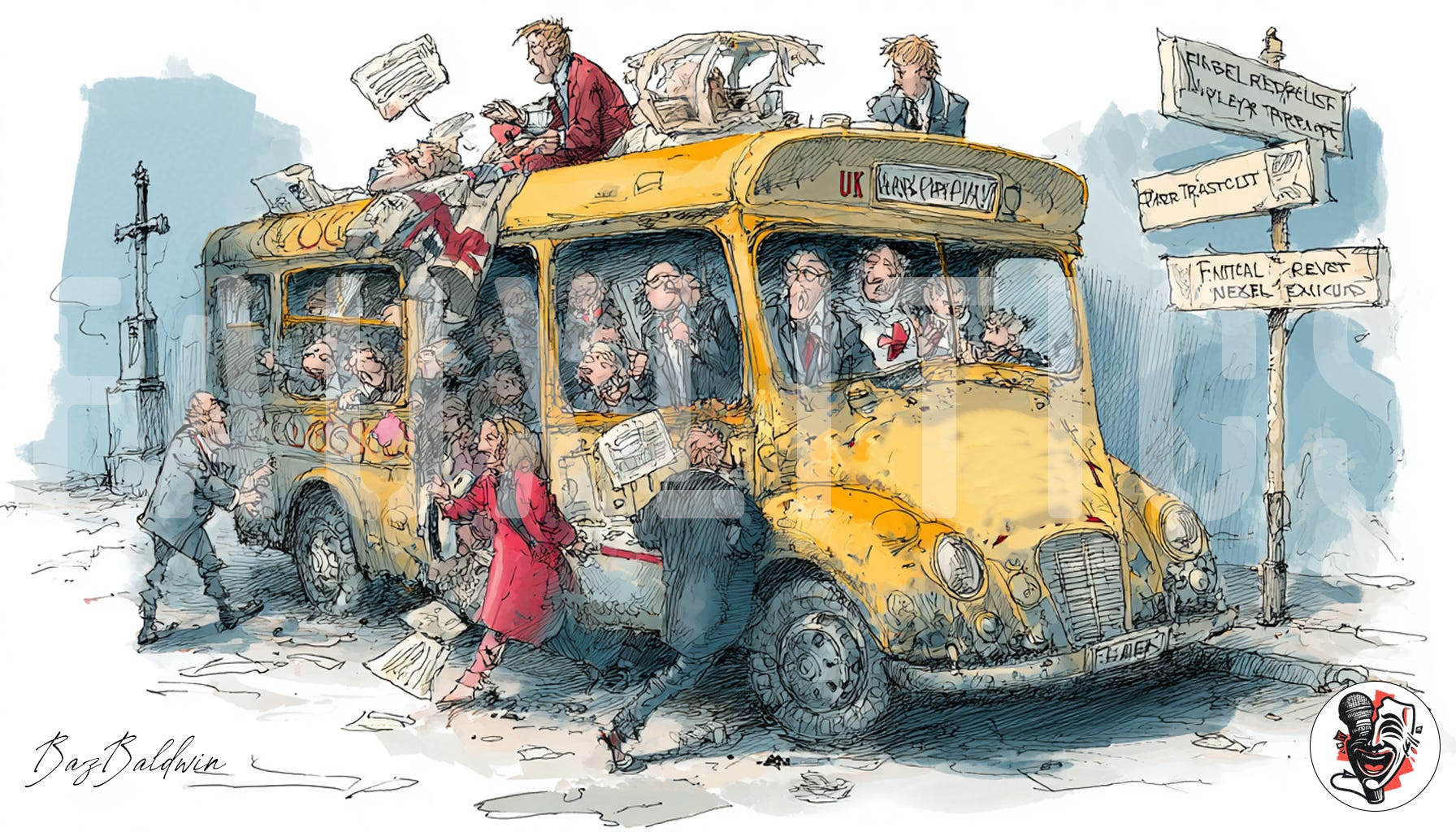
The UK government has unveiled legislation lowering the voting age to 16, a move critics have variously described as “courageous,” and “only slightly less controversial than asking toddlers to rewrite the NHS budget with crayons.” Ministers assure us this is not tinkering for the sake of it, but a serious act of democratic renewal..
Supporters insist the reform empowers young people, modernises the political system, and gives teenagers something productive to do between TikTok session. Opponents argue that the current system wasn’t broken, didn’t need fixing, and definitely didn’t need to be quietly repackaged with twenty-seven bonus modifications to election law hidden under the headline
But here we are. A nation stands divided. Some are worried this will open a can of worms. Others point out the worms left the can years ago, formed a committee, and are now submitting formal complaints about governance structures.
The Teenage Vote
The centrepiece of this legislative jamboree is the much-touted lowering of the voting age to 16, an age at which young Britons have historically demonstrated impeccable judgment by such achievements as:
Riding a shopping trolley down a hill at 2am,
Googling “how to do taxes” before immediately giving up,
Falling in love with someone who possesses no redeeming qualities except a hoodie that smells like Lynx Africa,
Declaring university tuition fees “a scam” without knowing what a bursary is.
This, we are told, is the demographic now ready to help steer the national economy.
Proponents claim this is a long-overdue update to democracy, citing examples like Austria and Brazil, where 16-year-olds have voted for years with “only minor distortions to the political ecosystem,” by which analysts mean “a slight increase in enthusiasm for fringe parties, ideological extremities, and opinions formed primarily by who has the funniest memes.”
Still, defenders urge calm. Teenagers, they note, make up only around 2 to 3 percent of the electorate. A negligible slice, they assure us. Merely enough to swing marginal seats, alter campaign priorities, and send party strategists scrambling for TikTok consultants. Nothing dramatic.
Critics, meanwhile, raise the awkward point that most 16-year-olds have yet to experience the full suite of adult responsibilities. They have not yet spent much time in the adult world of taxes, rent, inflation, mortgages, job insecurity, or shouting “representative” into a phone while listening to endless hold music. But yes, absolutely, they’re now just as qualified as anyone else to decide the macroeconomic future of the nation.

Fixing What Wasn’t Broken
One of the great joys of British politics is its periodic urge to announce the urgent repair of democracy. Not because democracy is actually collapsing. That usually comes later, once the repairs are complete. Instead, it happens because “reform” sounds proactive, forward-looking, and wonderfully abstract in a press release.
This raises an obvious question that tends not to make it into ministerial speeches.
Was the UK’s voting-age system actually broken?
No.
It functioned much as it had for decades, producing governments of varying competence, legitimacy, and haircut quality.
Did it require urgent repair?
Also no.
Was anyone marching through Westminster chanting, “
What do we want?
LOWER VOTING AGE!
When do we want it?
IN ALIGNMENT WITH A BROADER LEGISLATIVE PACKAGE CONTAINING 19 OTHER CLAUSES ABOUT DONATION RULES, ID REQUIREMENTS, AND REGULATOR OVERSIGHT!”?
No again.
Yet here we are, adjusting the democratic franchise of around 1.5 million teenagers for reasons that remain helpfully broad. Official reasons. Worthy reasons. Democratic reasons. And, tucked quietly into the background, reasons that might make an election strategist nod thoughtfully while insisting this has absolutely nothing to do with them.
The public, naturally, is presented with the polished version. A neat, optimistic headline announcing empowerment and youth engagement.
“Votes at 16: Empowering Youth!”
What the bill actually includes is:
“Votes at 16: Also, Here’s a Massive Structural Tweak to Voter Registration, Party Finance, Foreign Donation Rules, Election Oversight, Polling Procedures, and Half a Dozen Delegated Powers Ministers Can Edit Later With a Ballpoint Pen.”
None of this is necessarily sinister. It is simply how large bills tend to work. But it does invite a certain cynicism when the most eye-catching change is wheeled out front and centre, while the more technical, consequential alterations are left to stretch their legs quietly in the annex.
Still, we are encouraged to focus on the teenagers. They are, after all, much easier to talk about.
Small Shifts, Real Consequences
Data from countries that let 16-year-olds vote reveal subtle but consistent trends:
Slight boosts to progressive parties in some regions.
Slight boosts to far-right populists in others.
A preference for “non-traditional” candidates (translation: anyone with good social-media game).
A decrease in loyalty to old centrist institutions.
A tendency to reward whoever feels new, disruptive or… entertaining.
Nothing catastrophic. Nothing apocalyptic. Just little distortions. A funhouse mirror for democracy. Perfectly safe, unless you were counting on elections working the same way as before, which is obviously too much to ask in the 21st century. But the thing about subtle distortions is that they accumulate.
Which raises a fair question: would it have been so outrageous to ask future voters to live a couple years as independent adults before making choices with national ramifications? You know, experience earning wages, paying rent, losing rent, doing annual tax returns, regretting annual tax returns, attending medical appointments alone, crying into a supermarket pizza, and discovering that council tax exists and is personal. These are not moral prerequisites for voting, but they do provide context.
But apparently waiting until adulthood is old-fashioned thinking now. As if democracy itself risks becoming obsolete if it does not onboard users earlier, faster, and with fewer questions asked.
The Details That Matter
The great political tradition of “burying the lead” lives on. While public debate fixates on the headline friendly spectacle of votes at 16, the real substance of the legislation is happening elsewhere.
Automatic voter registration pilots are introduced, framed either as a sensible fix for chronic under-registration or a data-sharing experiment whose long-term implications remain conveniently underexplored.
Adjusted corporate donation rules, tightened, but not that tight, to ensure that no one with serious resources feels unduly inconvenienced.
Revised thresholds for political risk-checks, with the helpful addition that they can be altered later by regulation.
Tweaks to electoral oversight, some helpful, some mildly concerning, some mysteriously vague.
Polling station experiments promise greater accessibility, possibly bringing democracy to supermarkets, transport hubs, and anywhere else footfall can be monetised.
New penalties for intimidating candidates are added too, objectively good, though slightly ironic in a political culture already comfortable with theatrical outrage.
Of course, none of this is marketed as “changing how elections are regulated, financed and monitored.”
It is marketed as “Votes for Young People!”
Some of these changes may well be justified on their own terms. Others may subtly advantage those writing the rules. Not enough to trigger alarm bells, but enough to raise eyebrows among opposition parties and constitutional obsessives. Still, this is modern governance. If you are going to invite new players into the game, it makes sense to adjust the rules while everyone is watching something else.
Age, Experience, and Political Authority
The big philosophical question lurking behind these reforms is simple:
Who should get to decide the nation’s direction?
People who haven’t lived the consequences of public policy, or people who have endured it long enough to develop lower back pain and a deep mistrust of anything branded “reform”?
Democracy says:
“Everyone gets a vote. Full stop.”
Reality says:
“Everyone gets a vote, but perhaps some people understand cause, effect, taxation, housing markets, geopolitical leverage, and health-care funding better than others.”
Lowering the voting age drags this uncomfortable tension into the open.
Should someone who has never paid national insurance be equal in the voting booth to someone who’s paid it for 40 years?
Should someone whose financial horizon extends to next weekend be equal at the ballot box to someone who has watched pension rules change three times?
These are not moral questions so much as practical ones, which is precisely why politicians avoid them.
But the notion that “everyone is equal in wisdom” is not empirically supported. Data consistently show that people change somewhat as they age, often becoming more cautious, more risk averse, and marginally more conservative. This is not because they wake up one morning craving Volvo estates, but because experience alters priorities.
Complicating matters further is the fact that individuals often change less than the political landscape around them.
Parties shift.
Cultural norms shift.
The Overton window shifts.
And then everyone accuses everyone else of having changed too fast or too slowly, depending on the decade.
So when older voters say, “I haven’t changed. The centre moved,” they’re often telling the truth… at least their truth.
Meanwhile younger voters insist, “No, you moved. And the planet’s on fire,” which is also a truth… at least their truth.
And so democracy becomes a shouting match about who stayed put while everything else drifted.
So what’s the big picture?
The UK has decided to lower the voting age not because the system was failing, not because there was a mass movement demanding it, and not because teenagers have collectively demonstrated a sudden mastery of public finance. It has done so because expanding the electorate is politically useful, rhetorically attractive, and legislatively efficient.
Does it empower youth? Sure.
Does it distort politics slightly? Also sure.
Does it move Britain out of sync with most of its traditional peers? Yes.
Does it slip in a few extra legislative tweaks like a chef sneaking vegetables into a child’s spaghetti? Absolutely.
Whether this reform is good or bad depends on your taste for risk… and your faith in teenagers. The country will, as ever, muddle through.
Politicians will adjust their messaging.
Analysts will analyse.
Teenagers will vote and then immediately tweet “lol adulting is wild.”
Democracy will survive. It always does. But it is worth being honest about what has happened here. This was not a necessary repair to a broken system. It was a redesign of a functioning one, driven by incentives nobody fully wants to say aloud.
And if you end this article thinking:
“Huh… maybe we should think harder about who votes, when, and why…”
Then you’ve reached precisely the discomfort the reform should make you feel.
Nothing opens a can of worms quite like someone insisting the worms needed more opportunities.
We’re not left or right. We’re just tired. No lobbyists. No donors. No scoops. No spin. Just clarity. Subscribe to Fauxlitics and join the resistance.